Archives
- 2018-07
- 2018-10
- 2018-11
- 2019-04
- 2019-05
- 2019-06
- 2019-07
- 2019-08
- 2019-09
- 2019-10
- 2019-11
- 2019-12
- 2020-01
- 2020-02
- 2020-03
- 2020-04
- 2020-05
- 2020-06
- 2020-07
- 2020-08
- 2020-09
- 2020-10
- 2020-11
- 2020-12
- 2021-01
- 2021-02
- 2021-03
- 2021-04
- 2021-05
- 2021-06
- 2021-07
- 2021-08
- 2021-09
- 2021-10
- 2021-11
- 2021-12
- 2022-01
- 2022-02
- 2022-03
- 2022-04
- 2022-05
- 2022-06
- 2022-07
- 2022-08
- 2022-09
- 2022-10
- 2022-11
- 2022-12
- 2023-01
- 2023-02
- 2023-03
- 2023-04
- 2023-05
- 2023-06
- 2023-07
- 2023-08
- 2023-09
- 2023-10
- 2023-11
- 2023-12
- 2024-01
- 2024-02
- 2024-03
- 2024-04
-
br Material and methods br Results Table shows
2024-04-25
Material and methods Results Table 1 shows that in addition to Leu/CysAP and DPPIV, genes for AspAP, ArgAP, MetAP, APM and PSA are expressed in adipocytes. The kinetic parameters of these AP are also shown in Table 1, revealing that APM has the highest Vmax and catalytic efficiency (Kcat/Km),
-
Increasing evidence indicates that ILCs participate
2024-04-25
Increasing evidence indicates that ILCs participate in a dialog with CD4+ T 20b sale [107–110]. This dialog is mediated, in part, through the expression of type II major histocompatibility complex (MHCII) molecules on ILC3s [107]. Depending on the expression of co-stimulatory molecules, MHCII:TCR in
-
Sphingolipids such as ceramides and glucosylceramides are an
2024-04-25
Sphingolipids, such as ceramides and glucosylceramides, are an important class of bioactive lipids. The levels of these lipids change as a function of adipose tissue mass and functionality, and are partially driven by cellular availability of palmitoyl-CoA. Aberrant accumulation of ceramide, glucosy
-
While A Rs communicate mainly with the D R subtype
2024-04-25
While A1Rs communicate mainly with the D1R subtype [36], A2AR and D2R interaction occurs mainly in basal ganglia. D2Rs colocalizes with A2ARs in this BMS777607 area where they are preferentially localized postsynaptically in the soma and dendrites of GABAergic striatopallidal neurons [69]. This int
-
br Acknowledgment br Introduction Vascular
2024-04-25
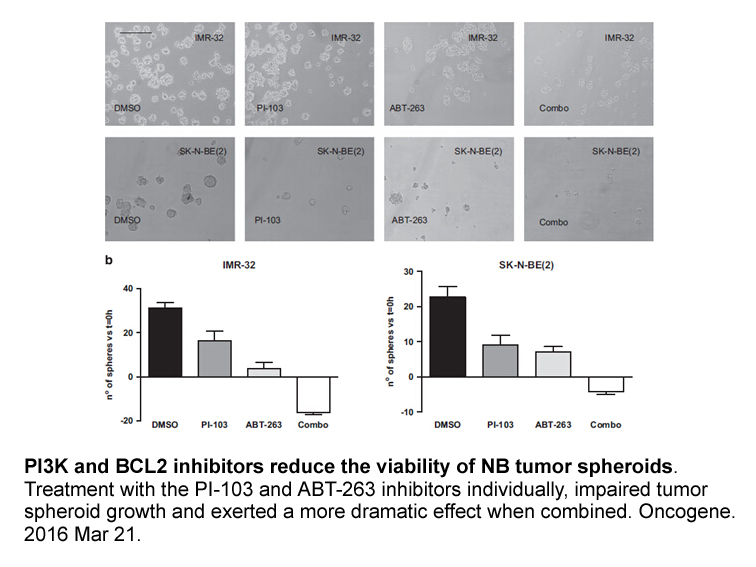
Acknowledgment Introduction Vascular smooth muscle cells (VSMC) exhibit the capacity to switch between a differentiated (contractile) and a dedifferentiated (synthetic) phenotype [1]. Synthetic VSMC express a lower amount of contractile proteins such as Smooth muscle 22α (sm22α) and α-Smooth m
-
d-glucose Our previous studies found that some
2024-04-25
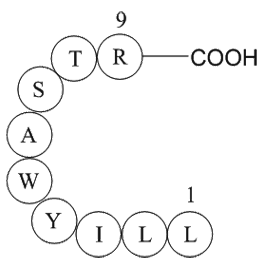
Our previous studies found that some steroid mimetic structures such as stilbene, biphenyl, naphthalene and benzothiophene rings were suitable for lipophilic moieties of 17,20-lyase inhibitors, and several inhibitors obtained using a steroid A, C-ring mimetic approach have already been published. Du
-
Aurora B is also very important in proper
2024-04-25
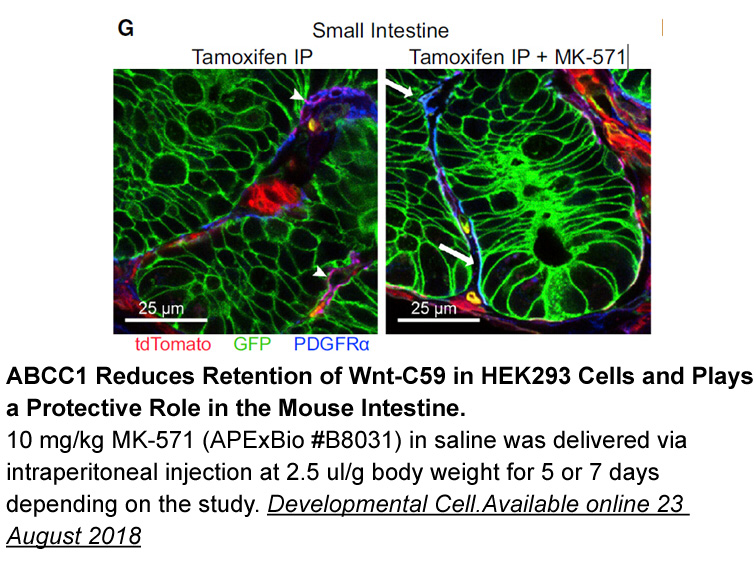
Aurora-B is also very important in proper cytokinesis. In the absence of Aurora-B mediated phosphorylation of Ser72 in vimentin, the two daughter cells remain attached to each other through bridges of cytoplasm; cytokinesis fails [31]. Other Aurora-B dependent proteins that are important for cytokin
-
A unique finding in this study is that
2024-04-25
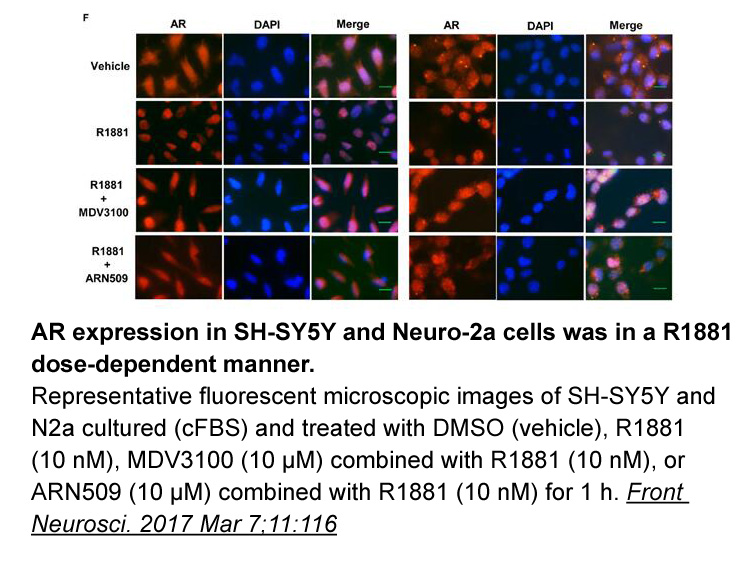
A unique finding in this study is that 12/15-LO influences CREB phosphorylation in the murine brain. While previous reports have found that knockout of 5-lipoxygenase, a related enzyme that also uses arachidonic SIN-1 chloride for substrate, can regulate CREB phosphoryation in the context of Alzhei
-
br Conclusion br Acknowledgments and
2024-04-24
Conclusion Acknowledgments and disclosure We thank Ms. Crystal Wylie for her help in the preparation of the manuscript. The development of the database upon which analyses of this study were dependent was supported by PO1 DC 00161 from the National Institute on Deafness and Other Communication
-
Calpeptin Finally impaired endothelial integrity culminates
2024-04-24

Finally, impaired endothelial integrity culminates in an increased plasma protein concentration in the interstitial space, and thus accumulation of fluid in the ECM, favoring the swelling of the face and limbs [2] mainly. Concurrently with this systemic change, there is intense activation of coagula
-
Recent studies revealed that certain plant derived compounds
2024-04-24
Recent studies revealed that certain plant-derived compounds can also interfere with AR function. One way of such an interference is by modulating its expression levels. This is the case for the two flavonoids quercetin and luteolin that have been reported to repress the function of AR by inhibiting
-
Amyloid fibrils are insoluble high molecular weight non crys
2024-04-24
Amyloid fibrils are insoluble, high-molecular-weight, non-crystalline aggregates and traditional experimental techniques for structure determination such as X-ray and solution NMR cannot resolve their high resolution structures [64], [68]. However, amyloid fibrils exhibit various advantageous featur
-
There is a growing body of evidence showing
2024-04-24
There is a growing body of evidence showing that pentobarbital causes memory disorders [3], [4], [5]. Our results that a single injection of pentobarbital into bilateral hippocampus significantly impaired hippocampus-dependent spatial memory retrieval (Fig. 1) add support to that evidence. Previous
-
Pregnane X receptor PXR is a nuclear receptor that plays
2024-04-24
Pregnane X receptor (PXR) is a nuclear receptor that plays an important role in regulation of metabolism and disposition of structurally diverse xenobiotics as well as endogenous steroids and bile acids (Bertilsson et al., 1998, Kliewer et al., 1998, Lehmann et al., 1998). PXR regulates the metaboli
-
The role of circulating physiologic concentrations of FGF
2024-04-24
The role of circulating physiologic concentrations of FGF21 in glucose metabolism, however, remains unclear. Circulating FGF21 levels in obese and diabetic rodents, and in patients with type 2 diabetes are significantly higher than those in controls without diabetes [4], [5], [6]. On the other hand,